

Pappy’sOlde Timey Calendar

The calendar › The sky in 2027
The sky in 2027
The seasons to the minute, the eclipses, and the nights the shooting stars fall thickest.
The seasons
| Spring begins | Saturday, March 20, 2027 | 3:25 p.m. Central |
| Summer begins | Monday, June 21, 2027 | 9:11 a.m. Central |
| Fall begins | Thursday, September 23, 2027 | 1:01 a.m. Central |
| Winter begins | Tuesday, December 21, 2027 | 8:42 p.m. Central |
Eclipses
- February 6: annular solar eclipse. The moon passes across the middle of the sun but is too far from the earth to cover it, leaving a bright ring of sunlight around it for as long as 7 minutes 51 seconds. The ring is seen along a narrow track across Chile, Argentina and the South Atlantic; a partial eclipse is seen over South America, western and southern Africa and Antarctica. Nothing of it shows from the United States.
- February 20: penumbral lunar eclipse. The full moon passes through the earth's faint outer shadow, which only dims it a little; near the middle of the eclipse a light, dusky shading may be noticed on one side of the moon. It is seen from the Americas, Europe, Africa and Asia. In the East and Middle West the moon rises with the eclipse under way on the evening of February 20; the faint shading is hard to see so low in the sky, and it is over before moonrise in the far West.
- July 18: penumbral lunar eclipse. The full moon barely grazes the edge of the earth's faint outer shadow, the slightest lunar eclipse of the century by NASA's catalog, and no change can be seen. It falls in daytime for the Americas. Nothing of it shows from the United States, where the moon is below the horizon.
- August 2: total solar eclipse. The long eclipse of the year: the moon covers the whole sun for as long as 6 minutes 23 seconds, along a track across the southern tip of Spain, Morocco, Algeria, Libya, Egypt, Saudi Arabia, Yemen and Somalia, longest in southern Egypt near Luxor. A partial eclipse is seen over Europe, Africa, the Middle East and western and southern Asia. Nothing of it shows from the United States, where it is still night while the moon's shadow crosses the Old World.
- August 17: penumbral lunar eclipse. The full moon passes through the southern part of the earth's faint outer shadow, about half its width in; the dimming is so slight that few will notice it. It is seen from the Pacific and the Americas. The whole eclipse is above the horizon across the United States in the small hours of August 17, from about 12:25 to 4:05 AM Central Daylight Time, but the change in the moon is very hard to see.
Meteor showers
- Quadrantids, best on the night of January 3, up to 65 an hour under a dark sky. A short, sharp shower from the small asteroid 2003 EH1, at its best for only a few hours. Peak night January 3-4, up to about 65 an hour under a perfectly dark sky. The moon, 11 percent lit, is down all night: a dark sky.
- Lyrids, best on the night of April 22, up to 20 an hour under a dark sky. An old shower from Comet Thatcher; in a usual year 10 to 20 an hour at the peak, now and then many more. Peak night April 22-23, up to about 20 an hour under a perfectly dark sky. The moon, 94 percent lit, rises about 10:15 PM and washes out the best hours before dawn.
- Eta Aquariids, best on the night of May 6, up to 75 an hour under a dark sky. Dust from Halley's Comet; best seen from the southern states, low in the east in the hour before dawn, and far fewer are seen from the North. Peak night May 6-7, up to about 75 an hour under a perfectly dark sky. The moon, 1 percent lit, is down all night: a dark sky.
- Southern Delta Aquariids, best on the night of July 29, up to 20 an hour under a dark sky. Faint meteors from Comet Machholz, seen low in the south after midnight. Peak night July 29-30, up to about 20 an hour under a perfectly dark sky. A thin moon, 14 percent lit, rises about 2:15 AM and does little harm.
- Perseids, best on the night of August 13, up to 120 an hour under a dark sky. The favorite shower of summer, from Comet Swift-Tuttle, rich in bright fireballs; NASA forecasts a little more than usual in 2027. Peak night August 13-14, up to about 120 an hour under a perfectly dark sky. The moon, 92 percent lit, is up until about 3:30 AM and will hide all but the brightest meteors.
- Orionids, best on the night of October 21, up to 20 an hour under a dark sky. Dust from Halley's Comet, the second shower of the year from it; 10 to 20 an hour in a usual year. Peak night October 21-22, up to about 20 an hour under a perfectly dark sky. The moon, 56 percent lit, rises about 11:15 PM and washes out the best hours before dawn.
- Leonids, best on the night of November 19, up to 40 an hour under a dark sky. From Comet Tempel-Tuttle; usually about 15 an hour, but in 2027 the earth meets an old dust trail and NASA forecasts about 40. Peak night November 19-20, up to about 40 an hour under a perfectly dark sky. The moon, 59 percent lit, rises about 10:30 PM and washes out the best hours before dawn.
- Geminids, best on the night of December 14, up to 90 an hour under a dark sky. One of the two richest showers of the year, from the asteroid 3200 Phaethon, with bright, slow meteors; it shows well from mid-evening on. Peak night December 14-15, up to about 90 an hour under a perfectly dark sky. The moon, 96 percent lit, is up all night and will hide all but the brightest meteors.
- Ursids, best on the night of December 22, up to 9 an hour under a dark sky. A small shower near the winter solstice, its meteors seeming to come from near the Little Dipper. Peak night December 22-23, up to about 9 an hour under a perfectly dark sky. A thin moon, 20 percent lit, rises about 3:30 AM and does little harm.
The planets
- Mercury. Mercury keeps close to the sun and is seen only low in the twilight, for a week or two around its greatest distances from the sun: in the evening sky in the west after sunset about February 3, May 28 and September 24, and in the morning sky in the east before sunrise about March 17, July 15 and November 4.
- Venus. Venus is the morning star, bright in the east before sunrise, from New Year's Day into early July, farthest from the sun on January 3. It passes behind the sun on August 11 and is lost in its glare from July to mid-September, then returns as the evening star in the west after sunset for the rest of the year.
- Mars. Mars is at its best early in the year. It stands opposite the sun on February 19, rising at sunset, up all night and at its brightest; from then on it is an evening star, lower in the west and fainter month by month.
- Jupiter. Jupiter stands opposite the sun on the night of February 10, up all night and at its brightest. It is an evening star until about mid-August, passes behind the sun on August 31, and is back as a morning star in the east before dawn from late September to the year's end.
- Saturn. Saturn is an evening star in the west after sunset until about March 20, passes behind the sun on April 7, and returns as a morning star in late April. It stands opposite the sun on the night of October 17, up all night, and is an evening star again for the rest of the year.
The twelve signs
The sun’s signs by the dates the old almanacs printed.
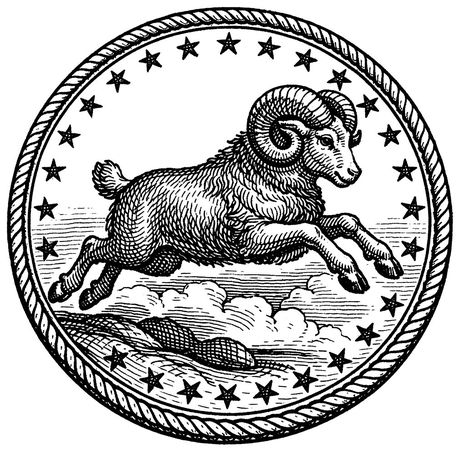 AriesThe ram. The sun enters on March 21 and leaves on April 19.
 TaurusThe bull. The sun enters on April 20 and leaves on May 20.
 GeminiThe twins. The sun enters on May 21 and leaves on June 20.
 CancerThe crab. The sun enters on June 21 and leaves on July 22.
 LeoThe lion. The sun enters on July 23 and leaves on August 22.
 VirgoThe maiden. The sun enters on August 23 and leaves on September 22.
 LibraThe scales. The sun enters on September 23 and leaves on October 22.
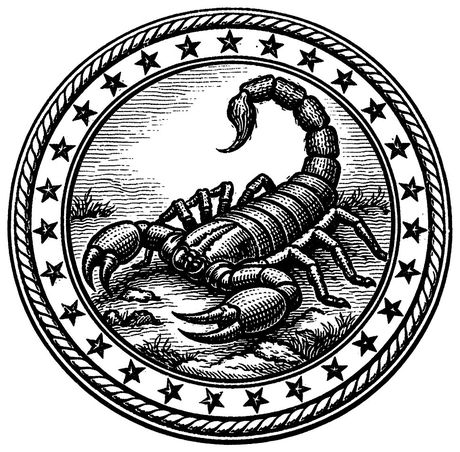 ScorpioThe scorpion. The sun enters on October 23 and leaves on November 21.
 SagittariusThe archer. The sun enters on November 22 and leaves on December 21.
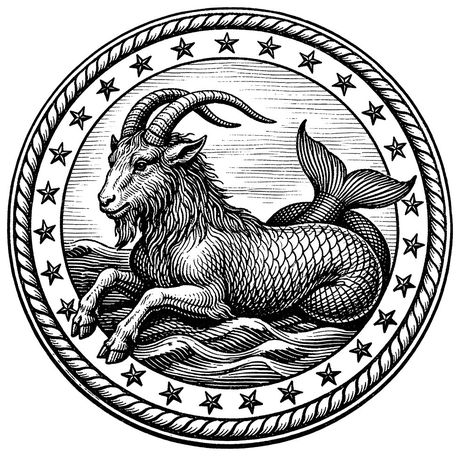 CapricornThe sea-goat. The sun enters on December 22 and leaves on January 19.
 AquariusThe water bearer. The sun enters on January 20 and leaves on February 18.
 PiscesThe fishes. The sun enters on February 19 and leaves on March 20.